
Bayer’s tumor-agnostic cancer drug gets European nod
Bayer said Monday that the European Medicines Agency had approved Vitrakvi for NTRK fusion-positive cancers. The drug won U.S. Food and Drug Administration accelerated approval in November.
Bayer said Monday that the European Medicines Agency had approved Vitrakvi for NTRK fusion-positive cancers. The drug won U.S. Food and Drug Administration accelerated approval in November.

On Thursday, Roche’s Rozlytrek won simultaneous FDA labels for NTRK fusion-positive solid tumors and ROS1-positive non-small cell lung cancer.

Enterprise EHR boosts scalability, interoperability, and governance for large healthcare systems.
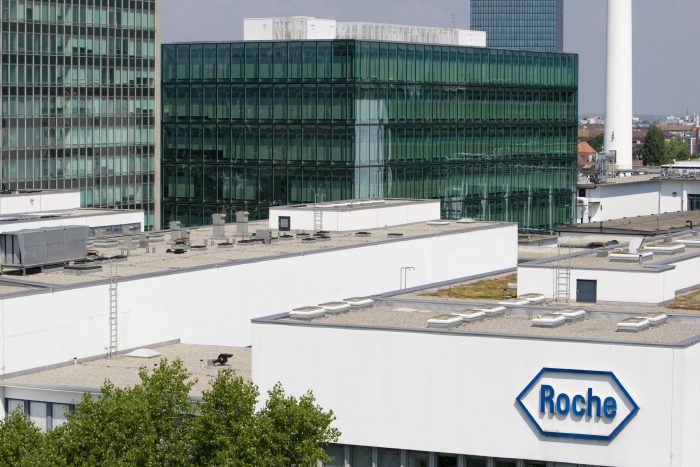
The FDA is expected to reach a decision by August on the drug, Rozlytrek, a tumor-agnostic cancer drug and potential competitor to Bayer's Vitrakvi.

Among 29 patients, the drug - designed for patients who become resistant to TRK inhibitors like Vitrakvi - showed a 34 percent response rate, according to Phase I data.

The agency set an August PDUFA date for entrectinib, which it gave priority review. It did the same for another Roche drug, polatuzumab vedotin, for high-grade lymphoma.

A roundup of some of the biggest trends and events in pharmaceuticals, biotechnology and diagnostics in 2018, including regulatory approvals, international trends, national policy and more.

Healthcare decision-makers, especially at pharmaceutical companies, must prioritize patient input. Data collected from social media listening is a significant step in the right direction.

That the drug will only be given to patients shown through testing to harbor a genetic anomaly that increases the odds of a response makes its approval an important milestone in the evolution of value-based care.
An oncologist compared NTRK fusion patients to a needle in a haystack, but had some clues of how to find them. Still, drugs like Vitrakvi call for genomic sequencing of all cancer patients, he said.